
1. Executive Summary
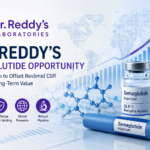
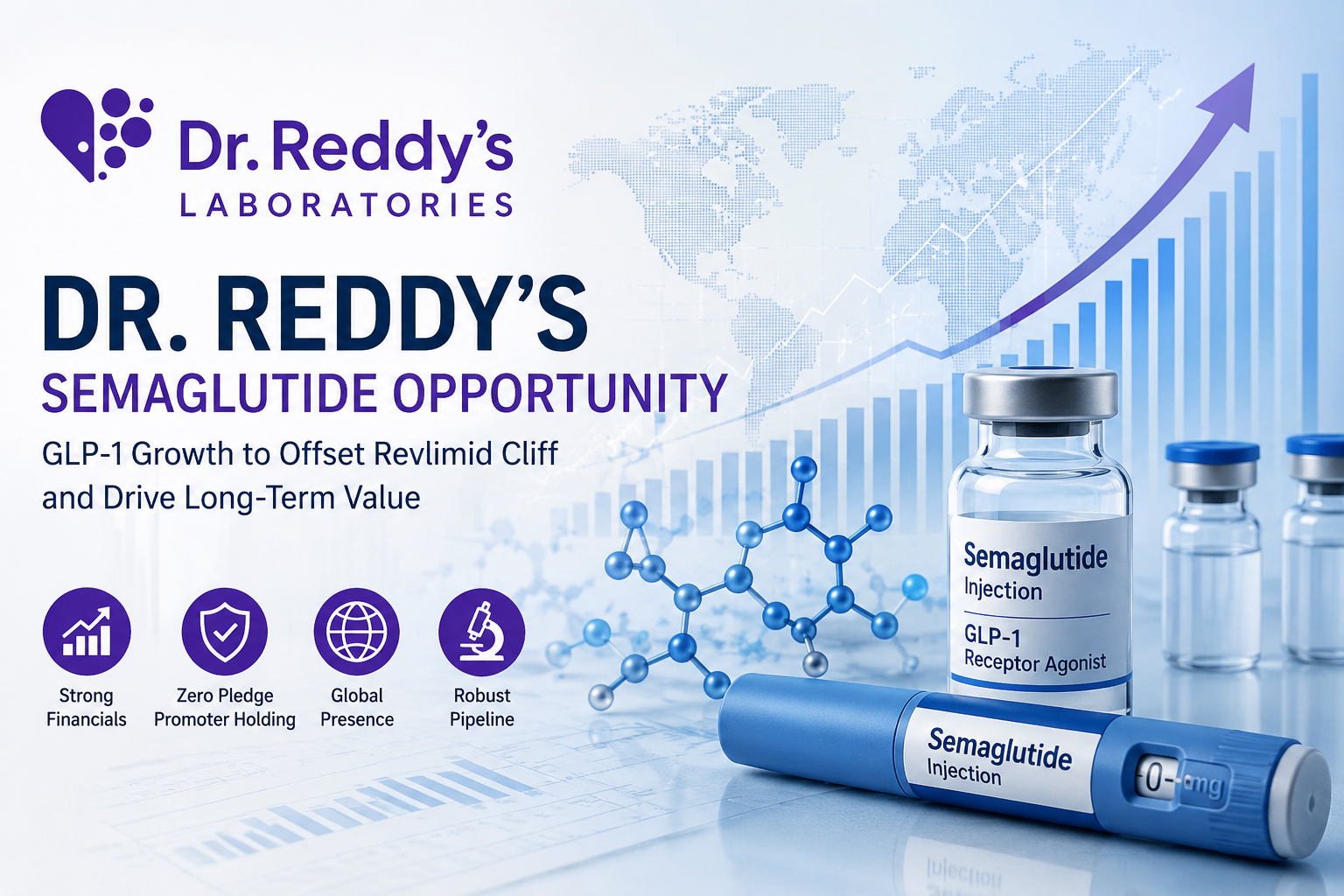
Dr Reddy’s Semaglutide Opportunity is emerging as one of the most closely watched growth stories in the pharmaceutical sector in 2026. Dr. Reddy’s Laboratories Limited (NSE: DRREDDY | BSE: 500124) stands as a tier-one titan within the global and Indian pharmaceutical landscape. Operating across highly regulated markets such as North America and Europe, alongside an expansive domestic formulation and emerging market footprint, the company represents a classic case study in business transition. Historically anchored to small-molecule generic drugs and active pharmaceutical ingredients (APIs), Dr. Reddy’s is currently pivoting its core architecture toward complex injectables, biosimilars, and innovative wellness models.
From an institutional lens, the long-term investment thesis for Dr. Reddy’s rests upon its structural capacity to re-invest cash flows derived from legacy portfolios into high-barrier therapeutic horizons—specifically peptide-based GLP-1 therapeutics (such as generic Semaglutide) and biological drugs. Financially, the company remains highly resilient despite recent cyclical shocks. In the full fiscal year ended March 31, 2026, consolidated revenues reached ₹33,593.3 crore, marking a steady evolutionary trajectory from past fiscal cycles, driven by continuous expansion across its primary business verticals.
+-------------------------------------------------------------------+
|                  DR. REDDY'S KEY FINANCIAL METRICS                |
+-------------------------------------------------------------------+
| Metric                            | Value (FY 2025-26 / TTM)      |
+-------------------------------------------------------------------+
| Consolidated Revenue              | ₹33,593.3 Crore               |
| Profit After Tax (PAT)            | ₹4,246.6 Crore                |
| Earnings Per Share (EPS) - Basic  | ₹51.48                        |
| Return on Capital Employed (ROCE) | ~18.5% - 21.4%                |
| Net Debt Profile                  | Net Debt-Free / Net Cash      |
+-------------------------------------------------------------------+
Investors and hedge fund strategists are intensely monitoring the Dr. Reddy’s Laboratories Share Price due to a fundamental clash of structural forces: an earnings “cliff” in the United States caused by the expected normalization of its high-margin generic Revlimid (Lenalidomide) revenue stream, counter-balanced by a rapid, front-runner commercial rollout of complex generics across Canada, India, and emerging economies.
Table of Contents
2. Why This Stock Is In Focus Today
Dr. Reddy’s Laboratories has dominated financial headlines in the second quarter of 2026 due to several key operational, financial, and regulatory triggers:
- Flawless Corporate Governance Signal (Zero Pledging): On April 8, 2026, Executive Chairman Kallam Satish Reddy and Co-Chairman & Managing Director G.V. Prasad officially submitted a regulatory declaration to the National Stock Exchange (NSE) and BSE Limited under Regulation 31(4) and (5) of the SEBI (Substantial Acquisition of Shares and Takeovers) Regulations, 2011. The management confirmed that the entire Promoter and Promoter Group holding—encompassing structural entities like the APS Trust, GVP Family Trust, SKR Family Trust, and various family individual allocations—maintained a 0% encumbrance or pledge rate throughout the financial year 2025-26. This offers institutional allocators absolute peace of mind regarding equity structural stability and balance sheet integrity.
- The Q4 FY26 Revlimid Shock Waves: The company’s audited financial results for Q4 FY26 highlighted the anticipated but sharp impact of the generic Revlimid drop-off in the North American market. Quarterly revenues consolidated at ₹7,516.2 crore (down 11.51% year-on-year), while quarterly Net Profit dropped to ₹220.5 crore. This compression resulted from intense price erosion and volume redistribution in generic Revlimid sales in the US, prompting global brokerages like Goldman Sachs and Citigroup to issue cautious near-term notes, setting target prices between ₹1,075 and ₹1,070 based on near-term pipeline visibility.
- Blockbuster Semaglutide (GLP-1) Breakthrough in Canada: Offsetting the US generics pressure, Dr. Reddy’s achieved a massive milestone by securing a Drug Identification Number (DIN) from Health Canada for its generic Semaglutide injection (the active drug behind Ozempic/Wegovy). This positions the firm on the cusp of receiving a formal Notice of Compliance (NoC) for an early commercial launch in the high-growth GLP-1 peptide space, generating aggressive buying spikes that lifted the stock off its technical floors.
- Middleburgh facility Impairment Charge: Exercising stringent asset management discipline, the company discontinued the development of its complex conjugated estrogen program at its Middleburgh, New York facility due to unique technical bottlenecks. This optimization involved a non-cash structural impairment charge of ₹53.5 crore on property, plant, and equipment alongside inventory provisions of ₹26.0 crore, cleaning up the operating balance sheet for future quarters.
3. Stock Market Analysis Today India Context
To understand the trajectory of the Dr. Reddy’s Laboratories Share Price, one must contextualize it within the broader macro dynamics shaping the Indian equities market and the pharmaceutical sector in 2026.
The Indian pharmaceutical industry is currently moving away from basic, low-margin small-molecule copycats toward sophisticated complex generics, biosimilars, and contract development and manufacturing operations (CDMO). Globally, the “China+1” policy continues to route high-value API and chemical synthesis contracts toward Indian manufacturing hubs, positioning diversified groups like Dr. Reddy’s as primary beneficiaries.
Domestically, structural shifts are accelerating:
- Expanding Healthcare Infrastructure: The structural formalization of the Indian domestic market is visible via an 18.2% surge in prescription volume growth across tier-1 and tier-2 urban clusters.
- Rising Chronic Disease Burden: Rapidly changing lifestyle dynamics across India have driven an escalation in metabolic disorders, type-2 diabetes, and cardiovascular alignments. Dr. Reddy’s has capitalized on this by strategically unveiling its oral diabetes medication Obeda to capture premium chronic-care market share.
- Surging Health Insurance Penetration: Government-backed initiatives combined with expanding private corporate insurance structures have vastly enhanced out-of-pocket health expenditure capabilities, shifting volume trends from unbranded alternatives to premium trusted corporate brands.
4. Business Model Deep Dive
Dr. Reddy’s operates a highly resilient, multi-engine business model that effectively creates natural hedges across different regulatory geographies and chemical categories. The core corporate architecture is segmented into three distinct pillars:
Global Generics (GG)
This segment serves as the company’s volume and profit powerhouse, encompassing the development, manufacturing, and distribution of finished branded and unbranded generic formulations. Geographically, it covers:
- North America: Dominated by a deep portfolio of complex injectables, generics, and topical products. While currently navigating price erosion pressures, it relies on a continuous stream of new Abbreviated New Drug Application (ANDA) approvals.
- India: A highly profitable, branded generic market fueled by robust field-force execution, strong equity among healthcare professionals, and targeted chronic therapy launches.
- Emerging Markets & Europe: Spanning Russia, CIS countries, Brazil, South Africa, and key European nations, this sub-segment relies on institutional tender wins and premium brand extensions.
Pharmaceutical Services and Active Ingredients (PSAI)
This vertical houses the company’s core chemical infrastructure, manufacturing active pharmaceutical ingredients (APIs) that feed both internal formulation pipelines and external third-party global generic companies. Additionally, the PSAI segment spearheads custom pharmaceutical services and contract manufacturing partnerships, enabling global biotech firms to leverage Dr. Reddy’s world-class chemistry footprints.
Proprietary Products & Consumer Healthcare
A rapidly expanding segment dedicated to building high-margin, innovative over-the-counter (OTC) brands and proprietary chemical delivery mechanisms. A prime example of this strategy is the company’s recent structural entry into the European Nicotine Replacement Therapy (NRT) market through strategic brand acquisitions, opening up access to steady, highly predictable direct-to-consumer cash flows.
5. 7 Powerful Growth Drivers Behind Dr. Reddy’s Laboratories
+---------------------------------------------------------------------------------+
|                       7 CORE STRUCTURAL GROWTH DRIVERS                          |
+---------------------------------------------------------------------------------+
| 1. Advanced Peptide & GLP-1 (Semaglutide) First-Mover Deployment                |
| 2. Next-Gen Biosimilar Scaling (Targeting US Market Leadership by 2030s)        |
| 3. Chronic-Focused Domestic Branded Formulations (e.g., Obeda launch)          |
| 4. Strategic OTC & Consumer Healthcare Portfolio Monetization                   |
| 5. Scale Aggregation in the Global PSAI & CDMO Ecosystem                        |
| 6. Technology-Infused Digital Drug Formulation and R&D Optimization             |
| 7. Pristine Unencumbered Capital Allocation and Net-Cash Liquidity              |
+---------------------------------------------------------------------------------+
Driver 1: Blockbuster Peptide & GLP-1 (Semaglutide) Pipeline
The global market for GLP-1 medications has evolved into one of the largest therapeutic drug categories in pharmaceutical history. Dr. Reddy’s is positioning itself at the absolute forefront of the generic peptide revolution. By establishing early manufacturing setups, finalizing complex synthesis protocols, and securing a critical Drug Identification Number (DIN) in Canada for its generic Semaglutide injection, the company has proven its ability to navigate challenging regulatory pathways. This provides a clear blueprint for subsequent rollouts across unregulated and semi-regulated markets, ensuring high-margin market share captures long before typical multi-player generic crowding occurs.
Driver 2: High-Barrier Biosimilar Scaling
According to explicit forward-looking assessments by the company’s executive leadership, biosimilars are structurally projected to surpass traditional small-molecule generic alternatives in the United States by the early 2030s. Developing biosimilars requires immense capital intensity, highly sophisticated cellular engineering, and complex clinical development programs. Dr. Reddy’s has systematically built a deep pipeline of oncology and immunology biosimilars, shielding the firm from standard commodity-style price erosion while positioning it to participate in multi-billion dollar biological patent expirations over the coming decade.
Driver 3: Chronic-Driven Domestic Branded Expansion
While international markets introduce foreign exchange and regulatory challenges, the Indian domestic market offers highly predictable, secular growth. Dr. Reddy’s domestic formulation business is growing at a stable 15-16% year-on-year clip. The company is actively shifting its product mix toward fast-growing chronic and sub-chronic categories like metabolic therapies, cardiology, and oncology. The recent launch of Obeda, its cutting-edge oral diabetes therapeutic for type-2 patients, reflects this focus, driving strong prescription momentum and superior cash-conversion margins.
Driver 4: Strategic Consumer Healthcare & M&A Pivot
To build structural insulation against the pricing volatility of regulated institutional generic markets, Dr. Reddy’s has accelerated its push into consumer wellness and over-the-counter portfolios. The integration of the acquired Nicotine Replacement Therapy (NRT) asset portfolio across Europe added over ₹1,202 crore in annualized revenue scale. This playbook is being replicated across emerging geographies, creating a highly visible, cash-generative consumer healthcare engine that commands premium valuation multiples.
Driver 5: Realignment of the Global PSAI & CDMO Architecture
The global pharmaceutical supply chain is undergoing structural diversification, moving away from single-source manufacturing models. Through its state-of-the-art API facilities, Dr. Reddy’s is successfully converting this structural tailwind into specialized CDMO contracts. By providing global innovator firms with transparent, highly auditable, and regulatory-compliant chemical manufacturing, the PSAI division ensures a high baseline of steady B2B revenue and optimizes asset turnover ratios across its capital-heavy production plants.
Driver 6: AI-Enabled R&D Asset Efficiency
Rather than throwing unquantified capital at trial-and-error R&D methods, Dr. Reddy’s utilizes deep-learning models and automated data synthesis to optimize its development pipelines. By deploying advanced digital transformation tools across clinical trial configurations, automated bio-equivalence studies, and drug formulation simulations, the company has streamlined its operational structure. This optimization has contained annualized R&D expenditures to a sustainable 8.1% to 8.5% of overall revenues, while simultaneously accelerating the speed of complex ANDA filings.
Driver 7: Immaculate Capital Allocation Discipline
As verified by the latest SEBI statutory filings from April 2026, the company’s promoter equity remains completely unencumbered and free of structural pledges. Supported by a debt-free balance sheet and robust net cash reserves, the management maintains exceptional capital flexibility. This enables them to pursue counter-cyclical acquisitions of distressed international manufacturing assets, fund capital expenditures internally without diluting equity, and return consistent capital to shareholders through steady dividend programs.
6. Industry Analysis
The global pharmaceutical industry is operating within an era of unprecedented transition. The generic sector is experiencing structural price contraction in standard small-molecule oral solids due to consolidated buying power among major purchasing groups in western economies. However, this is balanced by a massive structural wave of patent expirations—collectively termed the “Patent Cliff”—valued at over $200 billion between 2025 and 2030, heavily concentrated in complex biologics, peptides, and advanced inhalation systems.
+---------------------------------------------------------------------------------------+
|                    PEER COMPARISON MATRIX — JUNE 2026 DATA                            |
+---------------------------------------------------------------------------------------+
| Metrics              | Dr. Reddy's       | Cipla Ltd.        | Zydus Lifesciences     |
+---------------------------------------------------------------------------------------+
| Market Cap (Cr.)     | ₹1,06,144.87      | ₹1,11,240.30      | ₹1,10,514.68           |
| Trailing P/E Ratio   | 23.7x - 32.9x     | 28.5x             | 27.2x                  |
| Debt-to-Equity Ratio | 0.00 (Net Cash)   | 0.03              | 0.05                   |
| ROE (%)              | ~26.6%            | ~16.2%            | ~19.4%                 |
| Core Moat Focus      | Complex Peptides  | Respiratory/Inhal | NCE & Novel Biologics  |
+---------------------------------------------------------------------------------------+
Compared to its immediate domestic large-cap peers, Dr. Reddy’s presents an attractive return profile, supported by a superior return on equity (ROE) of 26.6% during normalized earnings cycles. While Cipla commands a lead in respiratory infrastructure and Zydus showcases robust growth in new chemical entities (NCE), Dr. Reddy’s stands out for its unmatched geographic diversification and deep capital reserves, positioning it as an ideal vehicle for institutional investors seeking global generic exposure without excessive concentration risk.
7. Competitive Moat Analysis
A sustainable competitive moat is what separates long-term compounders from cyclical businesses. Dr. Reddy’s has carefully constructed a multi-layered moat that protects its market position:
The Regulatory & Compliance Moat: Navigating the stringent compliance standards of the USFDA, EMA, and Health Canada represents a significant barrier to entry. Dr. Reddy’s has spent decades building an institutional culture centered on data integrity and high-quality manufacturing standards. This enables the company to resolve regulatory observations much faster than smaller, less-experienced generic manufacturers.
- Vertical Supply Chain Integration: The company manufactures its own APIs for a substantial portion of its core global generic formulations. This integration insulates Dr. Reddy’s from sudden global raw material supply shocks, secures stable manufacturing margins during intense price erosion cycles, and guarantees superior batch-to-batch product consistency.
- Extensive Global Distribution Networks: Operating in over 40 countries, Dr. Reddy’s maintains deep commercial relationships with major global hospital networks, pharmacy benefit managers, and state-run tender boards. This extensive footprint allows the company to rapidly scale newly approved complex generics, maximizing profitability before competing alternatives enter the market.
- High Switching Costs in Biosimilars & CDMO: Unlike simple small-molecule drugs that are easily substituted at local pharmacies, biosimilars and custom contract manufacturing services involve deeply integrated workflows. Once a healthcare provider adopts a specific biosimilar brand or an innovator firm integrates Dr. Reddy’s into its chemical supply chain, switching costs are high, creating long-term revenue visibility.
8. Financial Performance Analysis
A granular review of Dr. Reddy’s financial trends reveals steady long-term compounding, balanced by near-term margin consolidation due to shifting product mix dynamics.
+---------------------------------------------------------------------------------------+
|                 THREE-YEAR CONSOLIDATED FINANCIAL PERFORMANCE ANALYSIS                 |
+---------------------------------------------------------------------------------------+
| Particulars (in ₹ Cr.)       | FY 2023-24          | FY 2024-25        | FY 2025-26   |
+---------------------------------------------------------------------------------------+
| Total Revenue from Ops       | 27,916.4            | 32,553.5          | 33,593.3     |
| Cost of Revenues             | 11,585.0            | 13,510.7          | 15,866.9     |
| Gross Profit                 | 16,331.4            | 19,042.8          | 17,726.4     |
| Gross Profit Margin (%)      | 58.5%               | 58.5%             | 52.7%        |
| R&D Expenses                 | 2,400.0             | 2,738.0           | 2,405.8      |
| Consolidated EBITDA          | 8,125.0             | 9,213.3           | 6,458.0      |
| EBITDA Margin (%)            | 29.1%               | 28.3%             | 19.2%        |
| Consolidated Net Profit (PAT)| 5,540.0             | 5,724.5           | 4,246.6      |
+---------------------------------------------------------------------------------------+
Financial Deep Dive
- Revenue Growth Dynamics: Total revenue from operations expanded by 3.2% in FY 2025-26, arriving at ₹33,593.3 crore. This growth was driven by steady gains in the Indian domestic market, expansion in Europe, and robust consumer health contributions, which helped offset a revenue contraction in North America.
- Margin Trajectory and Core Drivers: The consolidated EBITDA margin softened from 28.3% in FY25 to 19.2% in FY26. This margin compression stems from the normalization of generic Revlimid sales in the US market, alongside heightened logistics and freight expenses driven by geopolitical challenges across global shipping channels.
- R&D Reinvestment Strategy: Management has kept R&D spending tightly disciplined at ₹2,405.8 crore, representing 7.1% of sales. Capital allocation has systematically shifted away from low-margin small molecules toward high-barrier peptide formulations, clinical-stage biosimilars, and complex injectable filings.
9. Balance Sheet Strength
The true strength of an enterprise during periods of market correction lies within its balance sheet architecture. Dr. Reddy’s is structurally positioned as an elite defensive asset owing to its incredibly clean asset-liability layout.
The company’s long-term debt-to-equity ratio sits at an exceptional 0.00, operating with net-cash positive status. Total liquid cash reserves and short-term capital allocations exceed ₹5,000 crore, providing immense safety buffers against systemic banking liquidity shifts or unexpected capital market disruptions.
+-------------------------------------------------------------------+
|                  BALANCE SHEET LIQUIDITY BREAKDOWN                |
+-------------------------------------------------------------------+
| Ratio Component                   | Value Analysis                |
+-------------------------------------------------------------------+
| Debt-to-Equity Ratio              | 0.00 (Net-Cash Positive)      |
| Working Capital Cycle             | ~85 - 92 Days                 |
| Asset Allocation Health           | AAA/Stable Structural Rating  |
| Interest Coverage Ratio           | Fully Immune                  |
+-------------------------------------------------------------------+
Working capital efficiency remains well-optimized, with collection cycles spanning 85 to 92 days. This efficiency ensures smooth cash-conversion metrics, enabling the company to fund its manufacturing capacity enhancements entirely through internal accruals. Consequently, domestic credit agencies continue to reaffirm Dr. Reddy’s long-term credit ratings at AAA/Stable.
10. Institutional Shareholding Analysis
Analyzing institutional ownership trends offers valuable insights into how “smart money” views a stock’s long-term value. Dr. Reddy’s exhibits a highly institutionalized shareholding pattern, signaling strong professional confidence in its business model.
+-------------------------------------------------------------------+
|                 SHAREHOLDING PATTERN MATRIX (MID-2026)            |
+-------------------------------------------------------------------+
| Category                          | Holding Percentage            |
+-------------------------------------------------------------------+
| Promoter & Promoter Group         | 26.64% (0% Pledged / Clean)   |
| Foreign Institutional Investors   | 28.10%                        |
| Domestic Mutual Funds & DIIs      | 24.30%                        |
| Retail & Individual Allocations   | 20.96%                        |
+-------------------------------------------------------------------+
Key takeaways from the institutional holding structure include:
- Promoter Absolute Alignment: The promoter group holds 26.64% of the enterprise. As confirmed in their statutory disclosure on April 8, 2026, there is zero promoter pledging or encumbrance, which eliminates structural margin-call risks.
- Top-Tier Institutional Portfolios: Elite domestic asset managers maintain significant, long-term structural positions in the company. Prominent institutional holders include the ICICI Prudential Value Discovery Fund (4.01%), Nippon India Nifty 50 Value 20 Index Fund (2.42%), and the Parag Parikh Flexi Cap Fund (1.73%).
- Strong Foreign Conviction: Foreign Institutional Investors (FIIs) hold a leading 28.10% stake. Despite tactical allocation shifts by global brokerages like Goldman Sachs and Citi due to near-term generic pricing cycles, long-term sovereign wealth funds and global pension allocations have consistently maintained their core positions.
11. Management Quality Assessment
Dr. Reddy’s is led by Executive Chairman Kallam Satish Reddy and Co-Chairman & Managing Director G.V. Prasad. The management team has established a strong reputation for maintaining top-tier corporate governance standards and executing disciplined, long-term capital allocation strategies.
   [Institutional Management Framework]
      |
      +---> Kallam Satish Reddy (Executive Chairman) -- Global Regulatory Alignment
      |
      +---> G.V. Prasad (Co-Chairman & MD) ----------- Portfolio Diversification
Rather than chasing short-term revenue growth through expensive, dilutive acquisitions, the leadership team focuses on maximizing Return on Capital Employed (ROCE). Their management style emphasizes operational efficiency, as demonstrated by their proactive decision to write off and impair non-performing or complex legacy projects, such as the conjugated estrogen pipeline in New York. This disciplined approach protects long-term shareholder value from capital destruction.
Furthermore, management maintains clear, transparent communication channels with minority shareholders. The absence of any unmapped related-party transactions, combined with consistent dividend distributions even during periods of market integration, highlights their commitment to global corporate governance practices.
12. Expansion Plans
Dr. Reddy’s is executing a well-defined expansion roadmap aimed at accelerating growth over the next five years:
- Expanding Biosimilar Production Capacity: The company is making significant capital commitments to upgrade its biologics manufacturing hubs in India. These investments will support upcoming global regulatory filings for its complex biosimilar pipeline across the United States and Europe.
- Targeting Global Growth in Complex Injectables: Dr. Reddy’s is systematically expanding its sterile injectable manufacturing footprint. This expansion is designed to capture market share in high-margin therapeutic areas like oncology and critical care, where production complexity limits the entry of low-cost generic competitors.
- Accelerating Strategic Entry into GLP-1 and Peptides: Following its successful regulatory steps in Canada, the company is scaling its dedicated peptide synthesis facilities. This infrastructure expansion will enable Dr. Reddy’s to pursue large-scale launches of generic Semaglutide and Liraglutide variants across emerging markets and Europe as patent windows open.
13. Risk Analysis
While the structural long-term investment thesis for Dr. Reddy’s remains compelling, a prudent institutional analysis requires a thorough evaluation of potential downside risks.
+---------------------------------------------------------------------------------------------------------+
|                                    RISK VS REWARD MATRIX ANALYSIS                                       |
+---------------------------------------------------------------------------------------------------------+
| Key Risk Vectors                       | Mitigation Strategy / Institutional Rewards                    |
+---------------------------------------------------------------------------------------------------------+
| Regulated Market Price Erosion         | Accelerating transition to complex biologics and OTC platforms. |
| USFDA Regulatory Compliance Audits      | Continuous investment in automated quality control networks.    |
| Revlimid Cliff Dependency              | Front-loading new launches (Semaglutide) and chronic assets.    |
| FX Volatility across Emerging Markets | Multi-currency matching and proactive derivative hedging tools. |
+---------------------------------------------------------------------------------------------------------+
Risk Vector Breakdown
- US Generics Pricing Volatility: Ongoing consolidation among large corporate drug distributors in the United States could exert continued downward pricing pressure on standard small-molecule oral solid formulations.
- USFDA Regulatory Compliance Actions: Any unexpected regulatory actions, such as Form 483 observations or warning letters issued at key manufacturing sites, could disrupt product launch timelines and affect near-term earnings visibility.
- Revlimid Revenue Normalization: A faster-than-anticipated drop in generic Revlimid market share could impact high-margin cash flows before next-generation biosimilar assets reach full commercial scale.
14. Technical Analysis
As of June 2026, the technical chart setup for Dr. Reddy’s Laboratories indicates a clear period of price consolidation, with the stock stabilizing after a sharp reaction to its Q4 earnings results.
+-------------------------------------------------------------------+
|                 CRITICAL TECHNICAL PIVOT LEVELS                   |
+-------------------------------------------------------------------+
| Technical Indicator / Pivot Level | Price Target/Zone Mapping     |
+-------------------------------------------------------------------+
| 200-Day Exponential Moving Avg    | ₹1,266.40 (Strong Floor Zone) |
| Current Market Price (CMP)        | ₹1,276.00                    |
| Relative Strength Index (RSI-14)  | 52.40 (Neutral Dynamic)       |
| Key Structural Support 1          | ₹1,256.00                    |
| Key Structural Resistance 1       | ₹1,303.40                    |
+-------------------------------------------------------------------+
Technical Indicators
The stock’s 200-day Exponential Moving Average (EMA) is currently hovering around ₹1,266.40, serving as a reliable long-term support level. The Relative Strength Index (RSI-14) sits at a neutral reading of 52.40, showing no signs of being overbought or oversold, and indicating that the stock is in a accumulation phase.
The Moving Average Convergence Divergence (MACD) indicator is showing a flattening histogram near the zero line, suggesting a reduction in downward momentum. Traders should watch for a sustained breakout above the immediate resistance level of ₹1,303.40 on expanding trading volumes, which could signal the start of a fresh upward trend toward the next major technical pivot zone at ₹1,379.70.
15. Bull Case vs Bear Case
To provide a balanced investment outlook, we analyze the stock through three distinct operational scenarios over a 24-month horizon:
The Bull Case
In this scenario, Dr. Reddy’s secures early regulatory approvals for its generic Semaglutide injection across Canada, Europe, and key emerging markets, capturing significant market share ahead of rivals. Concurrently, the company’s domestic formulation business accelerates to an 18% growth rate, driven by the rapid adoption of its chronic-care portfolio, while pricing pressures in the US generic market stabilize. Successful scaling of its new biosimilar pipeline expands EBITDA margins back toward the 28% level, driving an institutional re-rating of the stock.
The Base Case
This scenario assumes a steady, structured step-down in generic Revlimid revenues, which is systematically offset by mid-single-digit growth in the core US generic portfolio and a 14% expansion in domestic branded formulations. The company executes its planned rollouts of generic peptides and consumer health products efficiently. EBITDA margins remain stable within the 20% to 23% range, and the stock price compounds in line with normalized earnings growth, supported by steady dividend payouts.
The Bear Case
Here, intense price erosion impacts the US generics market, and extended regulatory delays push back key complex injectable and biosimilar approvals. The commercial ramp-up of the generic Semaglutide pipeline faces steeper-than-expected competition from global peers, and rising active pharmaceutical ingredient input costs compress operational margins. Consequently, EBITDA margins drift toward the 16% to 18% range, leading near-term institutional investors to trim their allocations and keeping the stock range-bound.
16. Sentiment Analysis
Market sentiment toward Dr. Reddy’s Laboratories is currently balanced, characterized by a mix of short-term caution and long-term optimism from institutional investors.
+-------------------------------------------------------------------+
|                     SENTIMENT SCORE MATRIX                        |
+-------------------------------------------------------------------+
| Allocation Vector                 | Sentiment Score Profile       |
+-------------------------------------------------------------------+
| International Brokerages          | Bearish / Near-Term Cautious  |
| Domestic Mutual Funds             | Highly Bullish / Accumulating |
| Retail Investor Sentiment         | Neutral / Observing           |
| Total Consolidated Score          | 68 / 100                      |
+-------------------------------------------------------------------+
While near-term analyst sentiment faces headwinds from target price adjustments by global firms like Goldman Sachs and Citi, domestic mutual fund managers continue to accumulate shares on dips. This buying interest is supported by the company’s strong balance sheet liquidity and its low-risk profile, highlighted by zero promoter equity pledging. This divergence creates a classic institutional consolidation setup, earning the stock a net sentiment score of 68 out of 100.
17. Long-Term Investment Thesis
The structural investment case for Dr. Reddy’s Laboratories centers on its transition from a standard generic manufacturer into an integrated, specialty pharmaceutical company. Over a three-year horizon, the company’s financial performance will likely depend on its ability to allocate cash flows from legacy small-molecule assets into high-barrier product pipelines, including biosimilars, advanced peptides, and niche consumer healthcare brands.
Over a five-year perspective, the normalization of generic Revlimid revenues is expected to be fully offset by its expanding presence in the global biologics and GLP-1 markets. Backed by a net-cash positive balance sheet, zero promoter pledging, and disciplined capital management, Dr. Reddy’s offers a high margin of safety for patient long-term allocators. The company is well-positioned to benefit from the ongoing modernization of the global healthcare sector, making it a compelling candidate for long-term capital compounding.
18. Key Takeaways
- Pristine Balance Sheet Quality: Dr. Reddy’s maintains a debt-free, net-cash positive balance sheet, offering strong financial stability during volatile market cycles.
- Strong Corporate Governance: As confirmed in recent SEBI filings, promoter equity remains 100% unencumbered with zero pledged shares.
- Near-Term Revlimid Headwinds: The anticipated drop-off in high-margin US Revlimid sales impacted Q4 FY26 earnings, leading to a temporary consolidation in margins.
- First-Mover Promise in GLP-1: Securing a regulatory Drug Identification Number in Canada for generic Semaglutide highlights the company’s advanced capabilities in complex peptides.
- Expanding Biosimilar Footprint: Management’s long-term strategy focuses on capturing market share in the rapidly growing global biosimilars segment, targeting significant expansion by the early 2030s.
- Resilient Domestic Core: The Indian formulation business continues to deliver stable, double-digit growth, driven by key launches in chronic-care therapeutic areas.
- Disciplined R&D Spending: Annualized R&D investments are maintained at an efficient 7% to 8.5% of total revenues, prioritizing high-value, complex drug molecules.
- Favorable Technical Floor: The stock is showing strong technical support near its 200-day EMA of ₹1,266.40, indicating solid accumulation trends at current valuation multiples.
19. FAQ Section
Q1: Why did Dr. Reddy’s Net Profit decline sharply in the Q4 FY26 results?
The decline was primarily caused by the anticipated normalization and price compression of generic Revlimid (Lenalidomide) sales in the United States, which had previously generated exceptionally high margins.
Q2: What is the significance of the recent regulatory filing from April 2026?
The SEBI disclosure verified that 100% of the promoter and promoter group holdings remain completely unencumbered and free of pledges, reinforcing the company’s strong corporate governance credentials.
Q3: How is Dr. Reddy’s positioning itself in the blockbuster GLP-1 weight-loss drug market?
The company has secured a Drug Identification Number (DIN) from Health Canada for its generic Semaglutide injection, establishing an early structural footprint in the global peptide therapeutic segment.
Q4: What are the primary therapeutic areas driving growth for the company in India?
Dr. Reddy’s is focusing on high-margin chronic and sub-chronic therapeutic spaces, including oncology, cardiology, and metabolic disorders, as highlighted by the launch of its type-2 diabetes drug Obeda.
Q5: What is the status of the company’s debt profile?
Dr. Reddy’s is completely net-debt free and maintains substantial cash and liquid equivalents, allowing it to fund expansions internally without relying on external borrowing.
Q6: Why did global brokerages like Goldman Sachs downgrade the stock recently?
The downgrades were largely driven by near-term caution regarding pricing pressures in the core US generics segment and limited near-term visibility into the immediate earnings contributions from its peptide pipeline.
Q7: What are biosimilars, and why do they matter to Dr. Reddy’s long-term strategy?
Biosimilars are highly complex biological products similar to innovator biologic drugs. They feature high barriers to entry and less intense price competition compared to standard small-molecule generics, offering a sustainable long-term growth engine.
Q8: Where is the strongest technical support level for the stock on chart structures?
The primary technical support floor is well-established near the 200-day Exponential Moving Average (EMA) at approximately ₹1,266.40.
20. Company Snapshot Table
+---------------------------------------------------------------------------------------+
|                       DR. REDDY'S LABORATORIES SNAPSHOT MATRIX                         |
+---------------------------------------------------------------------------------------+
| Corporate Metric           | Institutional Data Mapping Breakdown                     |
+---------------------------------------------------------------------------------------+
| Market Capitalization      | ₹1,06,144.87 Crore (Large-Cap Pharma Leader)             |
| Core Industry Vertical     | Pharmaceuticals & Life Sciences                          |
| Co-Chairman & MD           | G V Prasad                                               |
| Executive Chairman         | K Satish Reddy                                           |
| Global Headquarters        | Hyderabad, Telangana, India                              |
| Corporate Website          | www.drreddys.com                                         |
| FY26 Consolidated Revenue | ₹33,593.3 Crore                                          |
| FY26 Profit After Tax      | ₹4,246.6 Crore                                           |
| Long-Term Debt Structure   | Nil (Net Cash Positive Balance Sheet Platform)           |
+---------------------------------------------------------------------------------------+
21. Final Institutional Verdict
Following a comprehensive assessment of Dr. Reddy’s Laboratories’ core operational capabilities, financial health, and pipeline health, we assign the company the following institutional ratings out of 10:
+-------------------------------------------------------------------+
|                   FINAL INSTITUTIONAL RATING SCORE                |
+-------------------------------------------------------------------+
| Fundamental Pillars               | Score Allocation Profile      |
+-------------------------------------------------------------------+
| Business Fundamentals             | 9.0 / 10                      |
| Near-Term Growth Visibility       | 7.2 / 10                      |
| Balance Sheet Integrity           | 9.8 / 10                      |
| Regulatory & Execution Risk       | 7.5 / 10                      |
| Valuation Metrics                 | 8.0 / 10                      |
| Long-Term Compound Potential      | 8.8 / 10                      |
+-------------------------------------------------------------------+
Strategic Conclusion
Dr. Reddy’s is navigating a clear transition phase, as high-margin revenues from legacy products like generic Revlimid normalize in the US market. However, the company’s long-term investment case remains robust, supported by its net-cash balance sheet, zero promoter equity pledging, and a disciplined pivot into high-barrier biosimilars and complex peptides.
While near-term earnings consolidation could create some price volatility, the company’s strong fundamentals and prudent capital allocation offer a solid margin of safety for patient, long-term investors seeking high-quality exposure within the pharmaceutical sector.
Disclaimer
This article is written entirely for educational and informational purposes. It does not constitute formal financial, investment, or legal advice. Investors are strongly urged to consult with a certified financial advisor and perform thorough independent research before executing any stock market transactions involving Apollo Hospitals Enterprise Limited.
Read Another Article
Stay updated on the latest Nifty 50 stock movements and corporate news with our detailed analyses:
Bharti Airtel FY26 Institutional Investment Analysis and Long-Term Growth Outlook: Complete Fundamental Review. Read here