





MAXHEALTH Stock Price Impact: 5 Astounding Reasons Why This Explosive Giant Will Conquer the Market! Booyah!
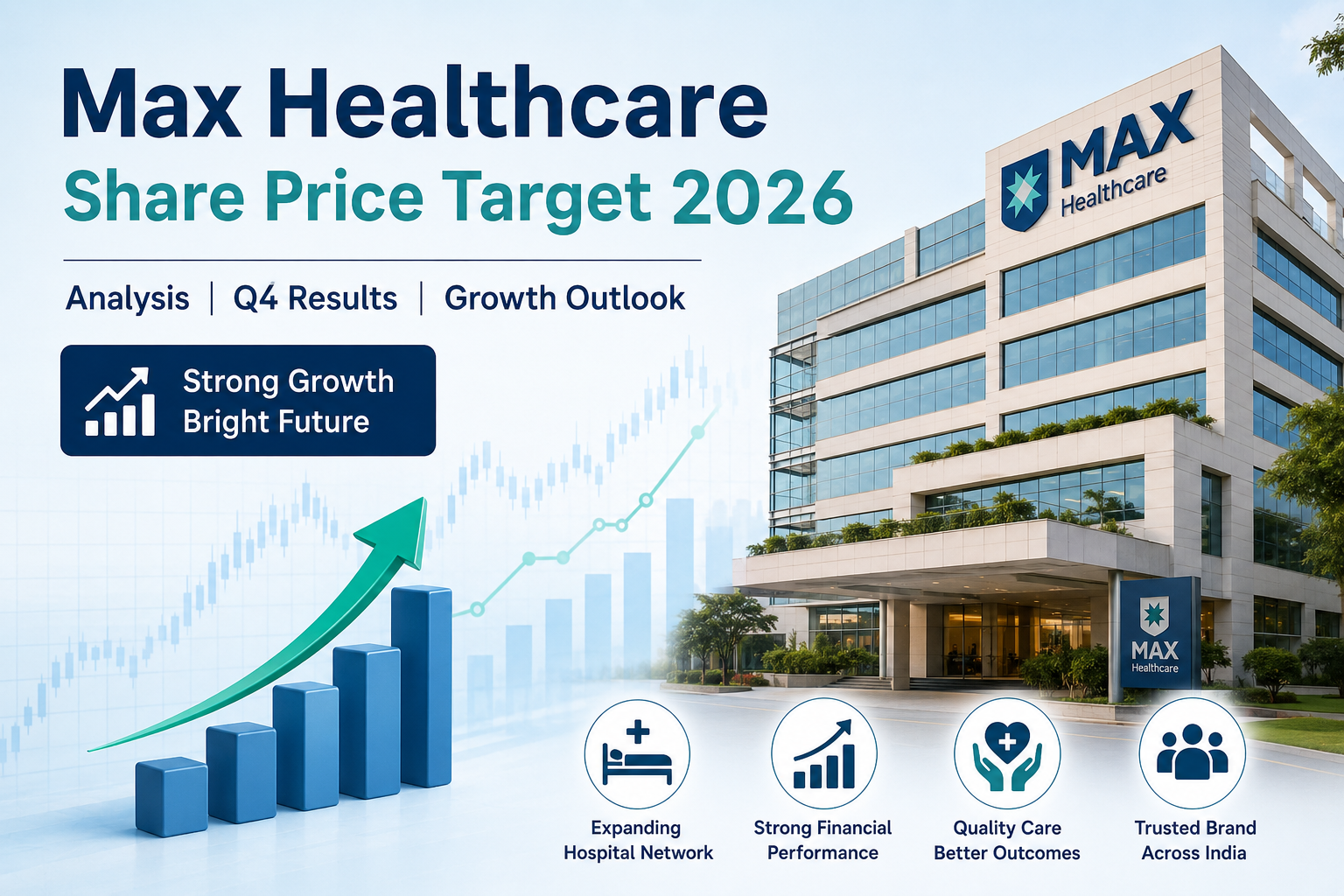
Max Healthcare Share Price Target 2026 is becoming a major discussion point among investors as India’s private healthcare sector enters a powerful growth cycle. 🏥 Rising household incomes, expanding health insurance coverage, and the growing burden of non-communicable diseases are driving strong demand for premium hospital infrastructure across the country. Private hospital chains are rapidly expanding across metropolitan regions and Tier 2 cities to address the massive shortage of quality healthcare beds. This structural transformation in private medicine is expected to play a crucial role in shaping the future growth trajectory of MAXHEALTH.
📈 The stock of Max Healthcare Institute Limited, listed on the NSE as MAXHEALTH and the BSE as Scrip Code 543220, closed at ₹993.95 on May 26, 2026, registering a modest intraday decline of 0.69%. This marginal correction followed a volatile trading week triggered by the announcement of the company’s audited Q4 FY26 earnings results on May 21, 2026. Short-term market participants reacted to a slight mismatch between actual operational numbers and high consensus analyst estimates. To fully appreciate the prospective MAXHEALTH Stock Price Impact, one must analyze both short-term corporate actions and multi-year systemic tailwinds.
Table of Contents
Detailed Q4 FY26 Financial Disclosures and the MAXHEALTH Stock Price Impact
📊 During the quarter ended March 31, 2026, the company reported a consolidated net profit of ₹342 crore, representing a steady 7% year-on-year growth compared to the ₹319 crore reported in the same period of the previous year. Sequentially, profit after tax increased by 14% compared to the ₹301 crore recorded in the preceding quarter. Operational revenues grew 12% year-on-year to ₹2,143 crore, compared to the ₹1,910 crore recorded in Q4 FY25.
📉 Despite this positive performance, the stock suffered immediate downward pressure because the results missed aggressive analyst estimates. Consensus revenue estimates were missed by 18%, while quarterly earnings per share missed projections by 25%. Total full-year earnings per share stood at ₹14.83, which is a substantial increase over the ₹11.07 reported in the previous fiscal year. The increase in full-year net margins to 17% was driven by robust high-complexity surgical treatments.
💰 Looking at the broader network performance, Q4 FY26 gross revenue reached ₹2,664 crore, which is a 10% increase year-on-year. Network operating EBITDA stood at ₹682 crore, reflecting an 8% year-on-year growth. Network operating margins contracted slightly to 26.8% compared to 27.2% in Q4 FY25. This slight compression was primarily driven by a 230 basis points year-on-year increase in clinician compensation costs. This strategic cost-allocation represents a proactive long-term investment that is expected to shape the MAXHEALTH Stock Price Impact during the upcoming operational phase.
| Financial Parameter (Q4 FY26) | Reported Value (₹ Crore) | Year-on-Year Growth (%) | Margin / Operational Intensity |
|---|---|---|---|
| Consolidated Net Profit | ₹342 Cr | 7.00% | 15.97% PAT Margin |
| Consolidated Revenue | ₹2,143 Cr | 12.00% | Driven by higher OBDs |
| Network Gross Revenue | ₹2,664 Cr | 10.00% | Inclusive of Partner Facilities |
| Network Operating EBITDA | ₹682 Cr | 8.00% | 26.80% Operating Margin |
| Clinician Compensation | Up 230 bps | N/A | Aggressive talent recruitment |
| EBITDA per Occupied Bed | ₹73.4 Lakhs | -0.68% | Compared to ₹73.9 Lakhs in Q4 FY25 |
—
Unpacking the Multiphase Bed Expansions and Capex Timelines
🏗️ The long-term investment thesis is supported by an aggressive and highly efficient capital expansion plan. On May 21, 2026, the board approved an investment of approximately ₹1,400 crore for Phase-1 of its nationwide expansion program. This capital allocation yields a highly optimized blended cost per bed of ₹1.97 crore, excluding land costs. Examining the granular details of these clinical additions provides critical insights into the capital-efficient growth underpinning the MAXHEALTH Stock Price Impact.
🏥 In Mohali, Punjab, the company has fully operationalized its new Tower 2, adding 160 beds to its existing 220-bed capacity. This state-of-the-art 11-story facility was constructed under a public-private partnership on government-allotted land. It features highly specialized radiation oncology departments equipped with cutting-edge Edge linear accelerators.
🏢 In the high-density Mumbai market, the company has commissioned Phase 1 of Nanavati-Max Tower 2, adding 280 beds. Currently, 116 beds have been fully operationalized, and the remainder will come online over the next quarter. On-ground construction for Phase 2, which will add another 271 beds, is scheduled to commence in July 2026.
🏫 In South Delhi, the 400-bed Max Smart Tower 2 brownfield expansion has been successfully commissioned. Operational teams have taken control of 156 beds, with the remaining beds expected to launch in the upcoming quarter.
🌍 The company is also actively pursuing inorganic growth in key regional micro-markets. It recently acquired the 550-bed Sahara Hospital in Lucknow, the 200-bed Alexis Hospital in Nagpur, and the 500-bed Jaypee Healthcare facility in Noida. Furthermore, on April 8, 2026, the company entered into a definitive agreement to acquire a 58.39% stake in Kalinga Hospital in Bhubaneswar for ₹3.0 billion, establishing a firm clinical footprint in Eastern India. Management has also approved a capital investment of up to ₹1,020 crore to develop a greenfield 450-bed super-speciality hospital in Pune.
| Expansion Location | Bed Capacity Added | Completion / Operational Timeline | Strategic Significance |
|---|---|---|---|
| Mohali Tower 2 | 160 Beds | Fully Operationalized | Government PPP, advanced oncology |
| Nanavati-Max Phase 1 | 280 Beds | Commissioned (116 beds active) | Core metro presence, high ARPOB |
| Max Smart Tower 2 | 400 Beds | Commissioned (156 beds active) | Saket complex dominance, premium tech |
| Sahara Hospital Lucknow | 550 Beds | Fully Integrated | Entering rapid-growth UP market |
| Alexis Hospital Nagpur | 200 Beds | Fully Integrated | Expanding Central India footprint |
| Kalinga Bhubaneswar | 250 Beds | Acquisition announced April 2026 | Eastern India entry via KHL stake |
| Pune Greenfield Project | 450 Beds | Under Development (₹1,020 Cr Capex) | Core entry into Western India |
Granular Analysis of the Payer Mix and Specialty Portfolios
🩺 The network’s revenue stream is highly diversified across premium, high-complexity therapeutic areas. In FY26, oncology remained the single largest specialty, accounting for 24.1% of gross in-patient revenue. This was followed by cardiac sciences at 10.6%, renal sciences at 9.6%, and neurosciences at 9.6%. Specialty revenue growth was led by gastroenterology at 29% year-on-year, followed by orthopedics at 23%, and renal sciences at 20%.
💼 Payer segment optimization remains a core driver of the company’s superior average revenue per occupied bed. Third-party administrators (TPAs) and private corporate insurance accounts constituted the largest share at 34.9% of total revenues. Self-pay patients accounted for 34.2%, government-institutional accounts represented 21.9%, and international medical travel contributed 10.9%.
💊 While the institutional payer segment grew by 31% year-on-year, it was temporarily impacted by the planned discontinuation of low-margin chemotherapy drugs for certain institutional accounts. This proactive shift towards high-margin private oncology cases created a short-term revenue headwind but will support long-term operating margins. Consequently, this deliberate transition is a key operational driver that will influence the future MAXHEALTH Stock Price Impact.
Environmental, Social, Governance, and Corporate Citizenship Commitments
🌱 In addition to its clinical operations, the company maintains a robust Environmental, Social, and Governance (ESG) framework. During FY25, the network recycled approximately 33% of its total water consumption and utilized over 70,000 GJ of renewable energy. The company also doubled its on-site solar power generation capacity, advancing its sustainability targets.
🤝 On the social front, the company spent approximately USD 2.1 million on corporate social responsibility (CSR) initiatives in FY25. It provided over USD 25 million worth of free medical treatments to more than 350,000 underprivileged patients across its regional networks. The group also supports medical education through its extensive Max Medical Scholarship program, funding meritorious students from financially disadvantaged sections of society.
👩💼 Board governance is characterized by high independence and professional diversity. The board of directors consists of eight members, five of whom are independent, including one woman director. The boardroom is led by Chairman and Managing Director Abhay Soi, ensuring strong alignment between clinical excellence, corporate governance, and shareholder value.
Harnessing Macro Healthcare Trends and Job Creation Data
📊 The broader Indian healthcare landscape is experiencing strong tailwinds that support private hospital operators. According to Aon’s 2026 Global Medical Trend Rates Report, employee medical plan costs in India are projected to rise by 11.5% in 2026. While this represents a minor stabilization from the 13% projected in 2025, it remains significantly higher than the global average of 9.8%. The primary drivers of these rising medical costs are cardiovascular diseases, gastrointestinal illnesses, and oncology.
🏥 These macroeconomic tailwinds are driving significant capacity additions and corporate consolidations. On May 25, 2026, UK-based digital health firm Voy entered the Indian market by acquiring EarlyFit, a leading online obesity-care and GLP-1 treatment platform. This transaction highlights the massive global interest in India’s preventive medicine, chronic disease management, and wellness sectors. The expansion of specialized digital platforms, combined with broader market entry in preventive spaces, reinforces a highly supportive MAXHEALTH Stock Price Impact.
💼 This systemic expansion is also driving robust job creation across the country. Naukri’s hiring outlook research for the first half of 2026 indicates that the healthcare sector is leading national job creation, with 88% of healthcare recruiters actively expanding their workforces. This strong hiring activity is particularly concentrated in entry-level and clinical support roles, preparing the sector for its upcoming capacity expansions. Furthermore, traditional wellness sectors are also seeing strong policy support, as highlighted by the Ministry of Ayush’s Parliamentary Consultative Committee meeting on May 25, 2026, which focused on expanding yoga and naturopathy networks.
Comparative Valuation Against Industry Peers
💰 To understand the company’s relative market positioning, its operational and financial metrics must be compared with other leading listed healthcare chains. Private hospital operators trade at premium valuations due to their highly defensive earnings profiles and long-term structural tailwinds. This persistent valuation premium is a primary benchmark when comparing peer performances and analyzing the future MAXHEALTH Stock Price Impact.
🏥 Apollo Hospitals Enterprise Limited remains the largest integrated healthcare network in the country, commanding a market capitalization of over ₹1,20,836 crore. Apollo operates over 10,000 beds across 70 facilities, trading at a price-to-earnings (P/E) ratio of 60.95. Fortis Healthcare, backed by IHH Healthcare, operates approximately 3,800 beds with a market capitalization of ₹73,091 crore and a P/E of 68.27.
🏨 In the premium quaternary segment, Global Health Limited (Medanta) operates major hospital hubs in Northern India, commanding a market capitalization of ₹33,533 crore with a P/E of 59.97. Narayana Hrudayalaya (Narayana Health) operates over 6,000 beds with a market capitalization of ₹39,891 crore and a P/E of 44.54. Max Healthcare trades at a premium P/E ratio of 134.86, reflecting its high-yield metro location, superior margins, and premium specialty mix.
| Healthcare Operator | Market Cap (₹ Crore) | Operational Bed Capacity | Trailing P/E Ratio | Key Regional Footprint |
|---|---|---|---|---|
| Apollo Hospitals | ₹1,20,836 Cr | 10,000+ Beds | 60.95 | Southern India, Pan-India |
| Max Healthcare | ₹96,643 Cr | 6,000+ Beds | 134.86 | Delhi-NCR, Mumbai |
| Fortis Healthcare | ₹73,091 Cr | 3,800+ Beds | 68.27 | Northern, Western India |
| Narayana Health | ₹39,891 Cr | 6,000+ Beds | 44.54 | Karnataka, Eastern India |
| Medanta | ₹33,533 Cr | 3,000+ Beds | 59.97 | Delhi-NCR, Lucknow, Patna |
Technical Analysis and Pivot Levels
📉 From a technical perspective, the stock’s recent price action reflects consolidation following its post-earnings correction. The stock’s average traded price on May 26, 2026, was ₹993.61, on a daily volume of 2.52 million shares. This correction represents a healthy release of momentum after the stock reached its 52-week high of ₹1,314.30 on July 4, 2025.
📈 Classical pivot point analysis indicates that the stock’s central pivot level stands at ₹1,008.10. The immediate first support (S1) is located at ₹986.75, followed by the second support (S2) at ₹972.65 and the major trend-reversal support (S3) at ₹951.30. On the upside, technical resistance is expected at ₹1,022.20 (R1), ₹1,043.55 (R2), and ₹1,057.65 (R3).
📊 Volume dynamics show that during the sharp sell-off on May 22, 2026, daily trading volumes reached a high of 11.71 million shares as short-term traders exited. However, during the sessions on May 25 and May 26, volumes stabilized at 3.85 million and 2.52 million shares, respectively, suggesting that selling pressure is moderating near the key ₹990 support zone.
Multi-Horizon Forecast: Tomorrow, Weeks, and Months
🔮 Projecting a stock’s trajectory requires a detailed, multi-horizon analysis that integrates immediate physical catalysts with intermediate technical patterns and long-term capacity delivery.
Tomorrow’s Outlook (May 28, 2026)
To project the near-term trading session, the MAXHEALTH Stock Price Impact for tomorrow will depend heavily on physical conference participations and classical technical supports. The company’s Chairman and Managing Director, Mr. Abhay Soi, is actively presenting at the prestigious UBS Asian Investment Conference 2026 at the Four Seasons Hotel in Hong Kong on May 27 and May 28, 2026.
This flagship investor gathering attracts over 6,000 global institutional asset managers and sovereign wealth funds. While no unpublished price-sensitive information will be shared, physical engagement with long-term global allocators is expected to help the stock find institutional support near S1 (₹986.75) and potentially trigger a modest recovery towards the ₹1,010 level.
Weekly Price Outlook (June 2026)
Transitioning into the weekly perspective, the MAXHEALTH Stock Price Impact is expected to reflect technical base-building and analyst-backed buying momentum. Professional research desks maintain a highly constructive stance on the stock. Nuvama Professional Clients Group recently issued a tactical “BUY” recommendation, highlighting that the stock rejected a breakdown below the ₹950 level and completed a healthy weekly correction. Nuvama has set a weekly target of ₹1,160 with a stop loss at ₹1,025.
Prabhudas Lilladher has also maintained a “BUY” rating on the stock with a revised target price of ₹1,175. They note that the current correction represents an attractive entry point before the benefits of the Dwarka and Noida capacity additions begin to fully reflect in the financials starting in Q1 FY27.
Monthly Price Horizon (6 to 12 Months)
Over a multi-month period, the MAXHEALTH Stock Price Impact will likely be driven by capacity operationalization and margin stabilization. Simply Wall Street forecasts indicate that the company is on track to grow its annual earnings by 22% and revenues by 21.3%, outperforming the average growth rate of the domestic healthcare sector.
The company’s return on equity (ROE) is projected to reach a healthy 17.2% within three years. As the recently commissioned high-margin beds in Mumbai and Delhi-NCR scale to optimal occupancies, consensus analyst price targets of ₹1,151.72 to ₹1,300.00 appear highly achievable. This points to a potential upside of over 25% from current price levels.
Synthesizing the Overall Negative and Positive Catalysts
📝 Summarizing the recent corporate updates reveals a highly favorable balance between short-term risks and long-term compounding opportunities.
Transitory Negative Factors
- The company reported a consolidated net profit and revenue performance that missed aggressive consensus analyst expectations by 25% and 18%, respectively.
- The planned transition away from low-margin institutional chemotherapy drugs temporarily impacted revenue and EBITDA growth during the quarter.
- Network operating EBITDA margins contracted slightly by 40 basis points to 26.8% due to an aggressive increase in clinician compensation to support upcoming capacity expansions.
Structural Positive Factors
- The network delivered strong full-year financial growth, with net profit rising 22% to ₹1,631 crore and net revenue increasing 16% to ₹10,065 crore.
- The board approved a major ₹1,400 crore Phase-1 capex plan with an efficient blended cost per bed of ₹1.97 crore, excluding land costs.
- The network demonstrated robust debt-management, reducing net debt to ₹1,908 crore from ₹2,166 crore, supported by strong quarterly free cash flow generation of ₹581 crore.
- Strategic regional acquisitions, such as the 58.39% stake in Bhubaneswar’s Kalinga Hospital and expansions in Lucknow, Nagpur, and Noida, are on track.
Ultimately, the combination of physical institutional outreach, aggressive capacity expansion, and robust cash flow generation signals a highly bullish MAXHEALTH Stock Price Impact. Short-term post-earnings corrections represent a healthy consolidation phase rather than a deterioration of the business model. For long-term investors seeking high-quality exposure to the secular growth of India’s private healthcare sector, the current price levels offer a compelling opportunity.
Disclaimer
This professional stock market analysis blog post is intended solely for educational and informational purposes and should not be considered financial, investment, or trading advice. Stock market investments are subject to market risks. Always conduct your own research and consult a certified financial advisor before making any investment decisions.
Read Another Article
Stay updated on the latest Nifty 50 stock movements and corporate news with our detailed analyses:
Hindalco Earnings Supercycle Re-Rating Thesis 2026: Hidden Growth Story Behind Massive Value Unlock. Read here